If boating is part of how you picture daily life in Punta Gorda, Burnt Store Isles deserves a closer look. This waterfront neighborhood offers direct canal access and a more defined canal setup than some buyers expect, which can be a major advantage if you want a home that supports your time on the water. The key is understanding not just the lifestyle, but also the dock rules, access points, and ownership costs that come with it. Let’s dive in.
Burnt Store Isles at a Glance
Burnt Store Isles is one of Punta Gorda’s primary residential canal-front subdivisions. City history ties it to the area’s late-1950s canal development, and today the city maintains it as its own canal maintenance assessment district.
That matters because Burnt Store Isles is not just a collection of waterfront homes. It is a distinct residential canal neighborhood with 18 miles of seawall and 9 miles of canals, centered on Punta Gorda Isles Section 15 and extending to the city limits in Alligator Creek.
For you as a buyer, that means the boating lifestyle here is built into the neighborhood’s structure. Homes, docks, canals, and navigation routes are part of the daily rhythm, not an afterthought.
Boating Access From Burnt Store Isles
The practical boating route from Burnt Store Isles runs through Alligator Creek into Charlotte Harbor. From there, Punta Gorda’s broader boating network opens access to the Peace River, Myakka River, and the Gulf of Mexico through Boca Grande Pass.
Charlotte County maintains the Alligator Creek Waterway Unit to dredge, clear, maintain, and mark the creek for navigation and safety. That ongoing local maintenance helps support the connection between neighborhood canals and open water access.
For many boaters, that route is the heart of Burnt Store Isles living. You are not just buying a waterfront view. You are buying into a neighborhood shaped around getting from your backyard to Charlotte Harbor.
What Makes Burnt Store Isles Different
Compared with Punta Gorda Isles, Burnt Store Isles appears more compact and more rule-defined. That is a practical takeaway based on city maintenance figures and local code requirements, not an official ranking.
The city maintains Burnt Store Isles as a smaller canal district, while Punta Gorda Isles is much larger. For some buyers, that smaller footprint feels easier to understand and navigate, especially if you want a waterfront neighborhood with a focused identity.
The other big difference is the dock and long-term berthing rules. If you plan to keep a boat at home, those details can shape which properties make sense for you.
Dock Rules Every Boater Should Know
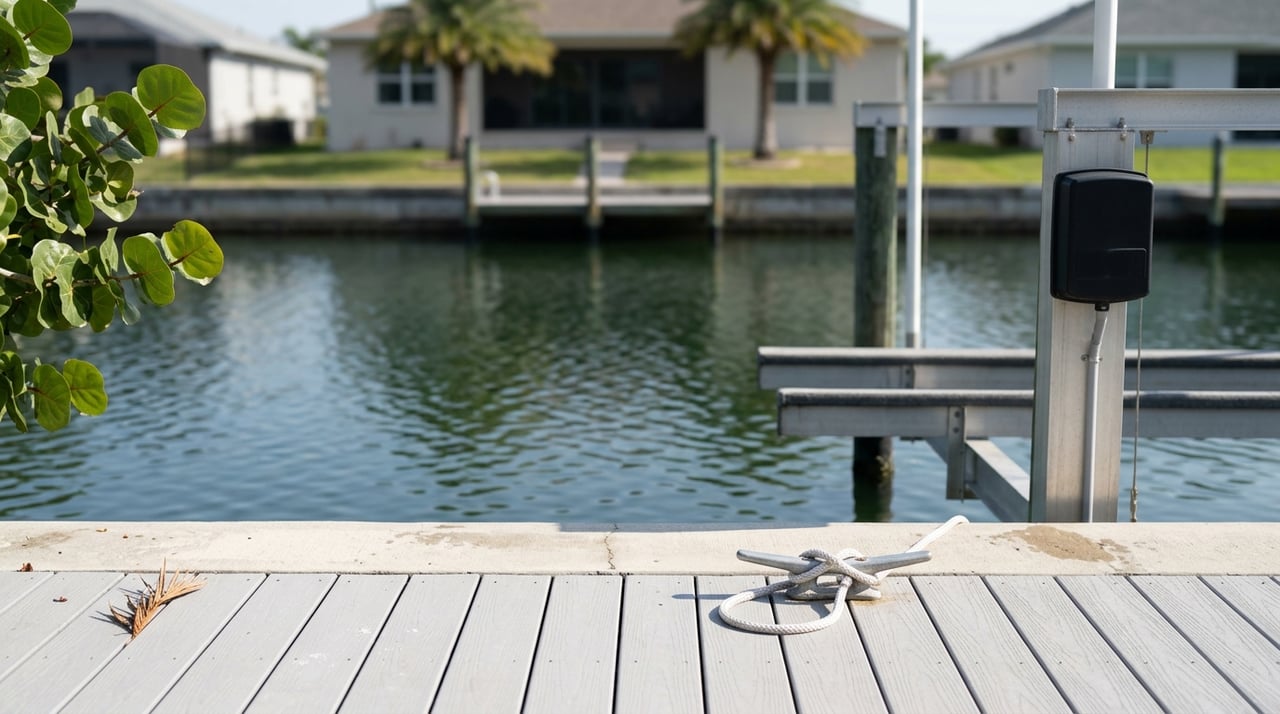
Burnt Store Isles has unusually specific local dock rules. In this subdivision, any new dock and slip intended for long-term berthing must include a boat lift or similar device.
The city defines long-term berthing as more than 30 days during a rolling 12-month period. The code also states that watercraft may only be stored waterward of the seawall, either on a lift, on davits, or in the water.
In simple terms, many Burnt Store Isles homes work best for boat owners when the property already has a private dock and lift setup that fits the rules. If a home only has a basic dock, you may need to look more closely at whether the current setup supports how you plan to use your boat.
Why a Boat Lift Matters Here
In some waterfront communities, a dock-only setup may be enough for everyday use. In Burnt Store Isles, a lift can be much more than a convenience because city rules directly affect long-term berthing.
That makes the existing dock configuration an important part of your home search. If you are comparing two canal-front homes with similar layouts and views, the one with a compliant lift and usable waterfront setup may offer more practical value to you as a boater.
It also helps to think ahead. If your current boat changes, or if you expect to move from casual boating to more frequent use, the lift capacity and dock design should match your future plans, not just your immediate needs.
Permits and Waterfront Improvements
Not every dock change is routine in Burnt Store Isles. The city says any dock or piling request beyond a standard dock on a standard lot requires a special permit, with review by canal advisory committees and City Council.
That means due diligence matters. If a property has added pilings, lift work, or a non-standard dock layout, you will want to confirm the permit history and understand what was approved.
This is one of those details that can easily get overlooked when a home looks move-in ready. On waterfront property, what is behind the home can be just as important as what is inside it.
Seawalls, Docks, and Home Condition
A waterfront showing should always include a close look at the seawall, dock, and lift, not just the house itself. Burnt Store Isles is maintained as a canal district, and seawall replacement can affect private improvements along the water.
The city tells residents to secure or remove docks, boat lifts, and related improvements during seawall replacement work. Contractors may also need clearance around docks and davits.
For you, that makes the waterfront infrastructure part of the real buying decision. Ask about the seawall’s age and condition, whether it has been replaced or assessed recently, and the age and condition of any dock or lift equipment.
Canal Assessments and Ownership Costs
If you are budgeting for Burnt Store Isles, canal maintenance should be part of the conversation. The canal system is funded through a separate assessment rather than only through general property taxes.
For fiscal year 2026, the city lists the Burnt Store Isles Canal Maintenance Assessment at $1,010 per single-family parcel. Multi-family parcels are assessed at $0.105 per square foot.
These assessments are adopted through the city’s annual budget process and public hearings. For buyers, the takeaway is simple: waterfront living here comes with a defined maintenance structure, and you should account for that cost early in your planning.
Everyday Life Beyond the Dock
Burnt Store Isles is about more than boats. Punta Gorda describes the city as having a small-town feel, with waterfront parks, walking and bicycling pathways, and independent shops and restaurants.
Within Burnt Store Isles, Alligator Creek Park primarily serves the neighborhood. A shared-use path also connects the area to the southern city corridor, including the Punta Gorda YMCA, shopping, dining, and other south-side destinations.
That mix can appeal to buyers who want waterfront living without feeling isolated. You can enjoy a boating-centered setup while still being connected to everyday errands, recreation, and local amenities.
Public Launch Options Nearby
Even if you plan to keep a boat at home, it is helpful to know the nearby public boating options. Punta Gorda offers access points that support both residents and visitors using the local waterways.
Ponce de Leon Park includes a public boat ramp that the city describes as a gateway to the Punta Gorda Isles canal system and Charlotte Harbor. Laishley Park Municipal Marina offers 85 slips and a public launch.
These options can be useful if you are waiting on dock work, hosting visiting boaters, or simply want additional flexibility. They also reinforce how boating is woven into daily life in Punta Gorda.
Questions To Ask Before You Buy
When you tour Burnt Store Isles, try to look at each property through both a homeowner’s lens and a boater’s lens. The right house for you should support how you actually plan to live on the water.
A few smart questions can help narrow the field:
- Is the home inside the canal district or on a non-waterfront parcel within Burnt Store Isles?
- Does the dock already have a lift?
- Does the current setup fit the city’s long-term berthing rule?
- What is the age and condition of the seawall?
- Has the seawall been replaced or assessed recently?
- Is there permit history for dock, piling, or lift work?
- How will watercraft parking be handled under the Special Residential Overlay rules?
These details may not be the first things you notice during a showing, but they often shape how well a property works over time.
Is Burnt Store Isles Right for You?
If your ideal Southwest Florida home includes canal frontage, direct boating access, and a neighborhood built around residential waterfront living, Burnt Store Isles can be a strong fit. Its smaller scale, defined canal district structure, and specific dock rules make it especially worth a closer look if you want clarity around how the boating lifestyle functions day to day.
At the same time, not every waterfront home here will suit every boater. The best fit often comes down to canal location, dock configuration, lift setup, seawall condition, and how you plan to use your boat throughout the year.
If you want help evaluating Burnt Store Isles homes with both lifestyle and due diligence in mind, Hillary Niver can help you navigate the details with calm, informed guidance.
FAQs
What is Burnt Store Isles in Punta Gorda?
- Burnt Store Isles is one of Punta Gorda’s primary residential canal-front subdivisions, maintained by the city as its own canal maintenance assessment district.
How do boaters reach open water from Burnt Store Isles?
- The usual route runs through Alligator Creek into Charlotte Harbor, with broader boating access from Punta Gorda’s waterways to the Peace River, Myakka River, and the Gulf of Mexico through Boca Grande Pass.
Do Burnt Store Isles homes need a boat lift?
- For any new dock and slip intended for long-term berthing in Burnt Store Isles, the city requires a boat lift or similar device.
What counts as long-term berthing in Burnt Store Isles?
- The city defines long-term berthing as more than 30 days in a rolling 12-month period.
What should buyers check on a Burnt Store Isles waterfront home?
- Buyers should review the seawall’s age and condition, dock age, lift condition, permit history for waterfront improvements, and whether the property setup fits local dock and watercraft storage rules.
Is there a canal maintenance assessment in Burnt Store Isles?
- Yes. For fiscal year 2026, the city lists the Burnt Store Isles Canal Maintenance Assessment at $1,010 per single-family parcel.